Founder Story · 03
From the Floor to the System
What if the things we learn from experience could become better ways of working?
Story 03 · 5 min read
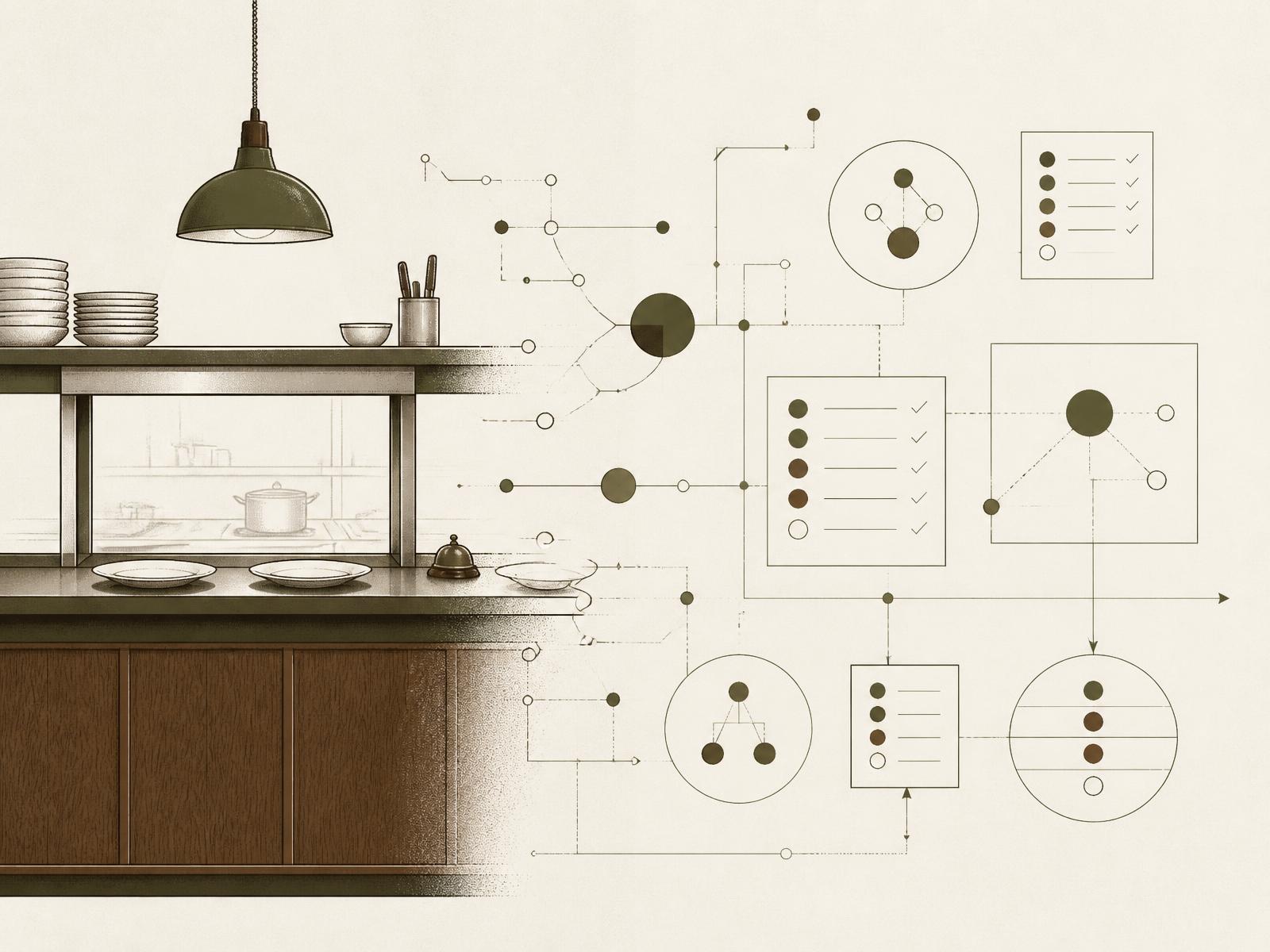
Founder Story 03
Years on the hospitality floor, and the question that eventually became EpicSys.
Hospitality teaches through repetition. The same service, the same handover, the same small failure at the same hour — until someone notices the pattern and quietly fixes it. Most of that knowledge lives in a few experienced heads and leaves when they do.
Excellence in hospitality is rarely a talent problem. It is a memory problem. Teams know what good looks like; what they lack is a reliable way to hold it — temperature logs that are actually checked, openings that do not depend on who is rostered, standards that survive a busy Friday.
What if the things we learn from experience could become better ways of working? Not more software for its own sake, but the discipline of the floor written down, made light enough to use during service, and useful enough that people keep using it.
EpicSys began there: checklists, food safety, operations and data shaped by people who have worked the shift, and AI used only where it removes work rather than adding it.
Digital transformation in hospitality does not begin with AI. It begins by turning everyday work into usable data.
Checklists, temperature logs, opening and closing routines, guest requests and handover notes are not paperwork. They are the operation speaking. When they are recorded cleanly and consistently, they form a living record of how a kitchen or dining room actually behaves — not how it is imagined to behave.
Over time that record shows things the eye alone cannot hold steady: where service begins to leak, where a team is understaffed without knowing it, where standards slip at a particular hour, and where sales are quietly left on the table. Each operation has its own shape, and the data belongs to that shape. Used properly, it lets a business improve its own food and beverage quality, its staffing effectiveness and its sales performance — not by copying a formula, but by learning from itself.
Only after this foundation is in place does AI become meaningful. With enough operational data, the same systems that once simply recorded work can begin to support decisions about service, staffing, purchasing, forecasting and management. The promise is not automation for its own sake. It is genuine digital transformation, built on something that already exists: the daily work of the floor.
The ambition is modest and difficult. Make the right thing the easy thing, every day, in every kitchen.
“Excellence in hospitality is rarely a talent problem. It is a memory problem.”